Systematic Innovation @ MinneAnalytics / Data Tech 2019 – 5/30/2019

Systematic Innovation in Data Science

Data science, as a dynamic and emerging discipline, is wrought with contradictions:

– Quantitative / qualitative (linear / non-linear; intuitive / analytical; left brain / right brain)
– Design / development (design / implementation; strategy / execution; strategic / tactical)
– Quality / speed
– Technical perspective / social perspective
– Machine intelligence / human intelligence
– Deterministic domains / non-deterministic domains

Conventional approaches to data science pursue optimization of these contradictions. Optimization instead of resolution limits the effectiveness of data science. Systematic innovation pursues resolution instead of optimization. Systematic innovation is a combination of art plus science; it is a powerful approach that eats contradictions for breakfast.

Let’s explore using systematic innovation and systems thinking to resolve these contradictions. Let’s make data science more effective.

Data Science 2.0?

MinneAnalytics / Data Tech 2019

post @ LinkedIn

text / graphics  {select “View” / “Present”}

Systematic Innovation @ Minnebar 2019 — 4/27/2019

What is Your Contradiction?

Systematic Innovation in Product Development

Start with a contradiction. If you plan to invest several years of your precious time in a product / service opportunity that doesn’t solve a contradiction, keep looking. If you are pursuing a product or service innovation and you aren’t planning on a multi-year commitment, keep looking. Whether you’re in a small enterprise or a large enterprise — find an opportunity that is worth a multi-year commitment.

A contradiction is two opposing forces or dimensions that apparently can’t be improved simultaneously. We usually optimize across contradictions instead of solving them — by increasing one variable while decreasing the other variable. Optimization is not the same as resolution. Optimization produces incremental innovation; resolution produces radical / disruptive innovation. Optimization can be a distraction from discovering significant, long-term product / service value.

Many innovations improve one variable in isolation. Some innovations even improve two variables — although the two variables are not inherently in conflict with each other, and they may even be un-related. Incremental innovation. Improve two variables that are inherently in conflict with each other. Radical / disruptive innovation.

Solving a contradiction addresses the two critical elements of a viable business model: Customer value (delivering two dimensions that previously required a compromise) and competitive advantage (delivering customer value that the competition has not discovered and / or is not equipped to deliver).

This approach is a variant of a broad domain that is known as systematic innovation. I will describe the basic model of systematic innovation. I will describe how the systematic approach is more effective than un-systematic approaches. I will describe how this particular systematic approach is more effective than other systematic approaches — it solves a contradiction among systematic approaches!

I will describe how prominent innovators have used this approach to disrupt entire eco-systems in medical technology and information technology. I will describe how I used this approach to discover a Web middleware innovation that is currently generating a healthy royalty stream. We may even explore an application or two on the fly if you want to iterate some ideas.

Join me as we discover product / service value with systematic innovation. If you haven’t discovered a contradiction that you can solve — keep looking!

post @ LinkedIn

text / graphics  {select “View” / “Present”}

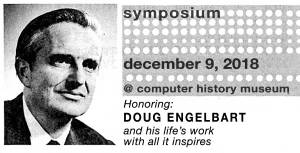
Doug Engelbart @ Computer History Museum — 12/9/2018

symposium-poster1

Doug Engelbart “discovered” the foundations of interactive computing @ Stanford Research Institute and presented them to the world on 12/9/1968 in “the mother of all demos”.

This event at the Computer History Museum to recognize the 50th anniversary of “the demo” drew tech luminaries such as Tim Berners-Lee, Vint Cerf, Alan Kay, Ted Nelson, and Andy van Dam.

It revives memories of collaborating with Doug at Stanford Research Institute circa 1990.

We were collaborating around social computing — a derivative of interactive computing / knowledge architecture and the predecessor of modern social media. I was at Stanford Research Institute; Doug had founded The Bootstrap Alliance — the predecessor of the Doug Engelbart Institute.

The focus of the alliance / the institute — then and now — was to improve our ways of improving in order to accelerate human / social capabilities. Like Doug — rather meta. This reference identifies Doug’s systematic approach to problem-solving — “an augmentation system for augmenting system development”. In other words — a virtuous cycle / a “flywheel effect”; a precursor of continuous improvement philosophies like lean manufacturing and agile development.

An important distinction that this description indicates: the philosophy and innovation system that Doug’s team used vs. the specific artifacts of their disruptive process. As this story describes — Doug didn’t “invent” interactive computing… he “discovered” it. He discovered it… systematically.

Another important distinction that this reference indicates: the focus on augmenting human intellect / harnessing collective intelligence that drove Doug’s team vs. the physical manifestation of technology.

Doug and his team were practicing “human-centric design” / design thinking — and reaping its benefits — long before those terms were trendy. The typical focus (then and now) tends toward the physical artifacts vs. the cognitive / social drivers; it tends toward random creativity / innovation vs. a systematic approach… rigorous intellectual process / mental discipline (especially at early stage).

I reference “the demo” and Doug’s systematic approach in this overview of systematic innovation and I relate it to Innovation Radiation — my particular approach to systematic innovation.

I earned an endorsement from Doug Engelbart for Adaptive Avenue — a patented invention in the Web architecture / user experience domain.

The Innovation System of Doug Engelbart

The ABCs of Organizational Improvement @ Forbes

Engelbart on Improving Improvement @ Service Science

Engelbart “Idea Bomb”

Vannevar Bush / “As We May Think”

The Augmented Knowledge Workshop

The Mother of All Demos @ YouTube

The Mother of All Demos @ Wikipedia

Systematic Innovation @ Business Architecture — 12/6/2018

Dynamic Strategy, Dynamic Structure: A Systematic Approach To Business Architecture

Volatile business environments require dynamic strategy. While conventional approaches to business architecture tend to perpetuate a static mindset, the discipline offers various leverage points for a more dynamic approach. This session will identify some leverage points, provide some design patterns for advancing the practice, and expose indications that the transformation is already in motion.

Twin Cities Business Architecture Forum – 12/6/2018

text / graphics

Systematic Innovation @ Product Camp 2018 — 11/3/2018

Discovering Product / Service Value with Systematic Innovation

Modern industry relies on a continuous flow of innovation… organizations are desperate for innovation as a growth engine. Organizations are organisms and they are subject to the biological maxim — “grow or die”. Synthetic growth is not sustainable; organizational health and prosperity requires organic growth. Innovation is oxygen. But innovation is too slow and too un-predictable. The quantity and quality of innovation is not sufficient.

Organizations don’t need to rely on random and esoteric inspiration. They can accelerate and amplify innovation — they can make it more repeatable, more scalable, and more distributed with a systematic approach. The notion of systematic innovation might sound like an inherent contradiction. We will resolve this apparent contradiction with a combination of art and science. We see opportunity in apparent contradictions and we use systematic innovation to extract value from such contradictions.

Maybe you haven’t heard the theory or history of systematic innovation. Sorry — this session won’t provide theoretical or historical context. We will work some examples with our unique approach. We will provide an opportunity for you to work an example. Join us for this practical introduction to systematic innovation.


Product Camp 2018

text / graphics