Customer Experience / Employee Experience

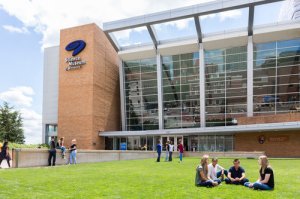
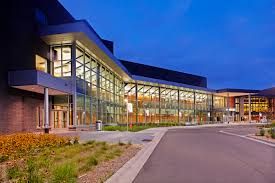
normandale partnership center

Customer Focus @ Normandale Partnership Center (7/17/18)

CX and EX — never the twain shall meet. Enter Customer Focus North on 7/17/18 at Normandale Partnership Center on the campus of Normandale Community College. The two disciplines converged with high energy in the region’s inaugural edition of this behaviorally-oriented event.

As Lee Schafer chronicled recently, MSP has long been a hub of customer experience and employee experience. As Dan Wallace explained to Lee, Joe Pine (author of The Experience Economy), Lou Carbone (founder of Experience Engineering), and Customer Experience Professionals Association (CXPA) all originated here. So the absence of a comprehensive annual event has seemed like a bit of an anomaly. In producing CFN and aggregating the local thought leaders in this field, Dave Mathias filled the gap with a flair.

Lots of thoughtful content and interaction — too much to cover in detail. Some of the highlights from my perspective:

nancy o'brien

The workshops were the main event. A wide range of practical topics — I felt like a kid in a candy store trying to make my choice. I followed the rules and attended only one workshop — some of my colleagues (who will go un-named) attended as many as three of the practical sessions. In retrospect, I wish that I had been less compliant. I attended “experience happiness” with Nancy O’Brien and Linda Saggau. Maybe sounds a bit funky, but Nancy and Linda are well-established in the serious EX realm and their approach (The Happiness Practice / THP) is both practical and relevant to the challenges of the modern workplace. It was the topic that was least familiar to me, so I decided to venture into foreign territory. It was a worthwhile addition to my portfolio.

An under-current of the event was the potential tension and synergy between CX and EX. I would assert that EX is the basis of CX; happy employees = happy customers. I think that Nancy O’Brien would agree, although there was a diversity of opinion around the event. I would also assert that all of the UX capabilities that we apply in the CX domain are equally relevant in the EX domain.

Other workshops included Sprocket CX on the intersection of customer experience and data science; Rêve Consulting on change management in the context of service design and managing the human side of change; and Kurt Schmidt / Emily Schmidt on experience prototyping. BTW: “Rêve” means “dream” in French. Pretty cool identity.

elizabeth yang

Elizabeth Yang of Optum Technology came from Boston to share her perspectives on the convergence / integration of service design and agile development. Another case of never the twain shall meet; analogous to the integration of development and operations in the DevOps movement, although a more complex interface. Very thought-provoking and relevant to my current pursuits. I also enjoyed a lively conversation with Elizabeth after her presentation.

dan hill

Lou Carbone headlined the show with an historical and evolutionary perspective on CX / EX; I resonated with his perspective on CX as a fusion of art and science. Dan Hill, author of Emotionomics, covered guest recovery.

As usual, the spontaneous conversations were often the most enriching. I enjoyed thoughtful conversations with Justin Royer of Sprocket CX at the CXPA pre-event; Brenda Dickinson and Sunny Ainley of Normandale’s continuing education program in the sponsorship area; and Dan Wallace at happy hour.

My current focus is systematic innovation and all roads lead to SI. This brief, yet intense, immersion in the CX world illuminated the potential application of systematic innovation in CX; also the unique potential of systematic innovation to integrate CX / user research with product design and technology development.

It’s a thing. Congratulations and thanks to Dave Mathias and his team for getting this thing launched and I’m looking forward to next year… presuming that Dave Mathias returns from darkest Africa.

I recently presented on systematic innovation in concurrent development at the SCPD webinar series; an audio recording of the session will be available soon.

I will be presenting on systematic innovation in UX at DevJam / Product Agility on 8/14/18.

post @ LinkedIn: “Adventures in Customer Experience / Employee Experience“

Strategy / Culture Alignment

work effects

Strategy / Culture Alignment workshop @ Work Effects (7/11/18 – 7/12/18)

I enjoyed a high-octane dose of Michael Stewart’s methodology around strategy / culture alignment in the luxurious and trendy Work Effects space at Baker Center.

My context: I’m currently focused on systematic innovation (“all roads lead to SI”) and, related to that focus, “culture of innovation”. I’m also interested in integration of strategy / execution and — as Michael confirmed — culture is a key element of execution. Strategy can’t activate in a vacuum — it needs to activate through culture. Culture will either accelerate or decelerate the execution of strategy.

A particular culture may need to adapt to systematic innovation; systematic innovation may need to adapt to a particular culture.

baker center


Some key elements of the WE model:

culture is not health (organizational health)

culture has specific dimensions; the WE SCA model has 10 dimensions

each dimension can be evaluated (qualitatively) on a spectrum of 10 positions

the spectrum for culture (unlike health, which is good to bad) is “good to good”

we are identifying relative / qualitative differences that aren’t inherently good or bad; they are just attributes of a particular culture

the key is how well the elements of culture are aligned with a particular strategy

we can actually measure (quantitatively) the alignment between strategy and culture

strategy is “what”; culture is “how”

in most cases, culture should adjust to strategy; in some cases, strategy may need to adjust to culture

in any case, strategy and culture should be moving toward alignment

their movement toward alignment can be measured over time

michael stewart

After covering the basic principles of the WE model, Michael “extracted” two case studies from workshop participants, so the case studies were rich and robust, not fabricated. The principles became concrete and the model came to life as we applied it to each case study. We identified areas of alignment and mis-alignment and prioritized potential opportunities for improvement. The shared experience of the whole group working on the same case studies produced a social learning effect. Developing each case study interactively with the sharp intellect of my colleagues was energizing and productive.


This immersion into the tension between strategy and culture (as “what” and “how”) has sharpened my perspective on systematic innovation and “culture of innovation” in the organizational and strategic context. I’m reminded that innovation is part of the “how” and I need to be ever so vigilant about identifying the “what” that lies on the other side of that “how”… and finding ways to align with it.

I also observed that the WE SCA model is an integrated design / implementation approach. Most current approaches to change management are dis-integrated — they adopt a change that has been determined by an external process and manage “the human side of change” with static training and communication. Change can’t possibly be human-centric if design and implementation are not integrated. Change management, if it is to be responsive to a VUCA world, must evolve toward a more dynamic and integrated design / implementation approach. Change practitioners, likewise, must evolve toward leading a design process that is both distributed and iterative.


I recently presented on systematic innovation in concurrent development at the SCPD webinar series.

I will be presenting on systematic innovation in UX at DevJam / Product Agility on 8/14/18.


post @ LinkedIn: “Adventures in Strategy / Culture Alignment”


Service Design

sdn


Service Design Network (SDN) @ OPUS College of Business (6/15/18)

Service design — an emerging discipline at the intersection of product design and customer experience.

Service design is gaining momentum. The Minneapolis and Chicago chapters of SDN combined forces for a regional gathering at the OPUS College of Business on 6/15/18.

The agenda covered a broad spectrum of relevant topics — the evolution of service design, various sub-disciplines, application in verticals such as medical services and financial services.

Stefanie Lenway, dean of the business college, opened the event by reminding us of the nature of humanity with the citation of Robot-Proof by Joseph Aoun.

ocb

Barbara Barry, design lead at Mayo Clinic / Center for Innovation, covered the role of AI in service design; she encouraged us to use inter-disciplinary teams, beginning to end, in order to optimize the human / machine interface. She also cited “the Most Human Human” award in juxtaposition to “the Most Human Computer” award — a playful prize for the human who can most reliably pass the Turing test.

Shilpi Kumar reminded us that ideation is not innovation. Emphasizing flow of interactions for workplace design, she illustrated how we need to connect the organizational and functional dots that enable ideation to “flow” toward a culture of innovation. She also encouraged the use of structured communication to improve productivity. My perspective: Innovation is 80% social — technological innovation is a socio-technical system.

(A principle of systems engineering: All systems are composed of sub-systems and operate in the context of a super-system; technological innovation operates in the context of a social system.)


chanda_headshot-chandapatel

I was inspired by a workshop on design fiction, guided by Chanda Patel at Fjord. Design fiction uses science fiction to generate / stimulate abstract ideas. It was helpful to learn how we can assemble a vocabulary of structured components (arc / terrain / object / mood) to generate an profusion of imaginative scenarios. Like systematic innovation and technological forecasting, disciplines that I practice, design fiction eliminates barriers to unconventional solutions and stimulates divergent thinking. I enjoyed partnering on this exercise with James Magargee / 3M, Nicholas Breutzman / Mayo Clinic, and Mike Conway / Azul Seven. We also got to observe several other teams in action. Other workshops included biomimicry in service design and advanced service blueprinting.

Megan Enright and Laura Salisbury at Salesforce offered insights for gaining adoption of service design in the enterprise. Laura and Megan were formerly at Sequence, a design consultancy that was acquired by Salesforce; acquisition of design consultancies is a trend. Their presentation was intriguing from the perspective of organizational design. They suggested organizational synergies / intersections between service designers and [1] content strategists (journey mapping / storytelling); [2] product managers (product vision / product roadmap); [3] technical architects (product vision / product roadmap. The “meta” notation here: use service design to gain adoption of service design! My perspective: Introducing service design is a social innovation.


amy-pogue-headshot

Amy Brady at US Bank also stimulated my brain with her perspective on organizational design. She asserted an ontology in which human interactions are relational, while organizational interactions are transactional. Within that ontology, we may find some clues to improving service design. We were nudged to imagine the other combinations: human / human, organizational / organizational (inter-organizational). Amy also posed an experience framework with five phases of quality (from high-touch to low-touch) and corresponding cost. This framework could improve overall value by customizing services to needs. My perspective: Are organizational interactions inherently transactional? How ’bout the magic quadrant — organizational x relational? We know that culture is aggregate behavior — individual behavior aggregated at the communal level. If we can transfer individual (human) behavior to the aggregate (cultural) level, can we replace “organizational” interactions at the macro level with “cultural” interactions that are relational?

Kat Jayne at Fathom Consulting elaborated on meaning, purpose, and connection as important, yet intangible, aspects of human health. She recommended Being Mortal by Atul Gawande.

Radhika Gupta at Fjord covered workplace design / workflow design and the principles that maximize productivity / creativity. Her ethnographic bottom line: Workplaces should be customized for various personalities and contain a variety of spaces. Even the kool, new, open spaces are not a one-size-fits-all proposition. Provide different spaces for different personalities; provide time / space for “not” connecting. Kool is customized. Service design in action.


markj_68_edited-1-markjones

Mark Jones at SD Lab reminded us of scenario planning for alternate futures. As a tool that has proven historically effective at promoting divergent thinking and identifying blind spots, Mark is encouraging a resurgence in its application.

I enjoyed a spontaneous conversation with Justin Royer, a principal at Sprocket CX, around the intersection of systematic innovation and design thinking. He also entertained me with an explanation of the “Sprocket” branding, and I entertained (?) him with the double meaning of “Virtual Coast“.

It was a full agenda. Thanks to Molly Fuller and the rest of her Minneapolis / Chicago team for organizing this action-packed event!


Related events:

I will be presenting on systematic innovation at Society for Concurrent Product Development (SCPD) on 7/19/18 and DevJam / Product Agility on 8/14/18; details are coming soon.

Customer Focus is coming to Minneapolis on 7/17/18; it seeks to bring new perspective and emphasis to customer experience and employee experience.


post @ LinkedIn: “Adventures in Service Design”


Concurrent Innovation

sciencemuseum1


Society of Concurrent Product Development (SCPD) @ Science Museum of Minnesota (6/14/18)

Concurrent product development — aka “concurrent innovation”, “concurrent development”, “concurrent engineering”, “simultaneous engineering”.

Some would say that concurrent innovation is based on five principles. I assert that it is based on three principles. It is said that real estate development is based on three principles: location, location, and location. I assert that concurrent innovation is based on three principles: parallelism, parallelism, and parallelism.

(I’m actually asserting that concurrent innovation is based on one principle: parallelism.)

All other attributes of concurrent innovation derive from this principle. Design and implementation (and the sub-phases / sub-disciplines of each of those phases) are performed in parallel. Not series — parallel. The progress of each discipline cross-references and informs the other discipline as they advance through the telescope of time. They may accomplish this cross-reference by short intervals / high-frequency iterations between the disciplines, but one discipline does not substantially finish before the other discipline substantially starts.

Concurrent innovation is a sibling or cousin or second cousin of agile development. Agile development is based on one principle: rhythm. All other attributes of agile development derive from this principle. The essential difference between agile development and conventional development is how they respond to the condition of expected scope not fitting expected timeframe. Conventional development changes the schedule (the time-series dimension); agile development changes the scope (the cross-section dimension).

(Software development is, itself, a system — a second-order system. All systems have two dimensions — a time-series dimension and a cross-section dimension.)

All other attributes of agile development are reflected in this response — changing the scope vs. changing the schedule.

Concurrent innovation is perhaps the analogy in the hardware domain of agile development in the software domain. Both of these disciplines derive all of their attributes from a single, unifying principle. Concurrent innovation can perhaps inform agile development; agile development can perhaps inform concurrent innovation.

‘Nuff said about the theory and concept of concurrent innovation.

SCPD convened on 6/14/18 – 6/15/18 at the Science Museum of Minnesota. Like taking a new route to the office, SCPD induced divergent thinking this year by changing venues. SCPD has historically convened at the 3M Innovation Center.

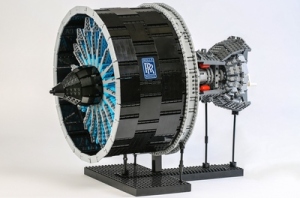
How fascinating to hear systems engineers (Jonathan Watson, Andrew Pickard) from Rolls Royce tell stories about designing and building jet engines. Not just the jet engines of today, but the jet engines of 10 and 20 years hence. One of the most complex artifacts ever conceived by humanity, jet engines aren’t designed and built in a day. How do we build and enhance and innovate jet engines? How do these patterns apply to more mundane initiatives?

Jonathan urged us to visit Lego Ideas and support “Rolls Royce UltraFan — The Ultimate Jet Engine“.

5083269-o_1c475bjj5hfs2lr1smseks174me-n5thrt1vvs0x1a-thumbnail-nrogj2ztcp6iqg1

We heard stories about channel innovation from Jeff Raider, co-founder of Warby Parker; Chris Walton, former director of Target “store of the future” initiative; Matt Pacyga, mobile development leader at Dairy Queen. Not surprisingly, Amazon was an undercurrent in the channel innovation theme. Will Barnes & Noble meet all of the criteria / exercise all of the advantages of modern customer experience in the physical domain (yes — the virtual domain will not conquer the world / the physical domain will persist in some form) and still, in the end, lose to Amazon?

Chris Walton recommended “The Era of Choice” by Edward Rosenthal; Matt Pacyga recommended “Smarter Faster Better” by Charles Duhigg.

Fritz Grutzner at Brandgarten fascinated us with stories about the emotional power of storytelling. Imagine conducting a survey about personification of fireplaces (yes, fireplaces) and finding a pattern. Imagine running shoes made of ocean plastic (yes, ocean plastic — you’ve heard of ocean plastic). Fritz recommended “How Customers Think” by Bernard Zaltman.

Amanda Zweerink and Beth Larson at Zeus Jones challenged us to revert to intuition… via “radical empathy”. Not abandon it in the data-driven frenzy of modern technology. But, wait — we’re just beginning to assimilate the data-driven culture. And, now, back to intuition? It’s a balance, say Amanda and Beth. If we are to practice not one or the other, but both — then I assert that integration of the two capabilities is a key requirement. While we may have (or develop) strength in each capability, integration is a significant gap (and opportunity).

I enjoyed partnering with Kumars Sakizadeh, a 3M scientist, on some exercises and informal discussion around technical teams and team-building (integrating multiple chemical disciplines on a team; integrating chemical / electrical / mechanical disciplines on a team; integrating technical disciplines and product management).

Thanks to Linda Cummings, Sarah Darmody, and the rest of the SCPD team for curating this thought-provoking event!


Related events:

I will be presenting on systematic innovation at Society for Concurrent Product Development (SCPD) on 7/19/18 and DevJam / Product Agility on 8/14/18; details are coming soon.

Customer Focus is coming to Minneapolis on 7/17/18; it seeks to bring new perspective and emphasis to customer experience and employee experience.


post @ LinkedIn: “Adventures in Concurrent Innovation”